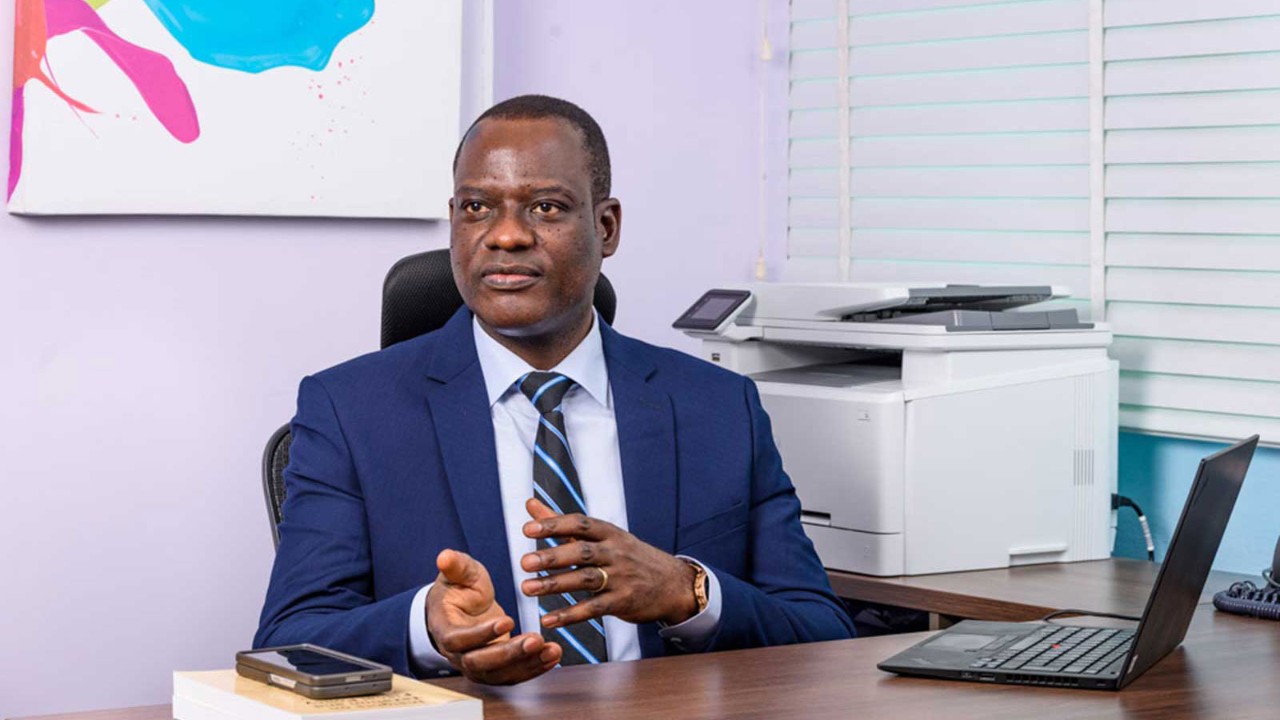
Taiwo Oyedele is a Nigerian economist, accountant, public policy expert, and government official who has become one of the most recognised figures in Nigeria's economic reform discussions. He gained national attention through his leadership of the Presidential Committee on Fiscal Policy and Tax Reforms, where he played a major role in efforts to reshape the country's tax system. His professional journey, which began in accountancy and developed through more than two decades in the private sector, eventually brought him into government. In 2026, he reached another major milestone when he became Nigeria's Minister of Finance and Coordinating Minister of the Economy.
| ProfileInformation | |
| Full Name | Taiwo Oyedele |
| Date of Birth | June 18, 1975 |
| Age in 2026 | 51 years |
| Place of Birth | Ondo State, Nigeria |
| Hometown | Ikaram, Akoko, Ondo State |
| Nationality | Nigerian |
| Profession | Economist, Accountant and Public Policy Expert |
| Education | Yaba College of Technology and Oxford Brookes University |
| Executive Education | LSE, Yale University and Harvard Kennedy School |
| Former Employer | PwC |
| Former Position | Fiscal Policy Partner and Africa Tax Leader |
| Government Position | Minister of Finance and Coordinating Minister of the Economy |
| Previous Government Role | Chairman, Presidential Committee on Fiscal Policy and Tax Reforms |
| Wife | Olaide Oyedele |
| Known For | Tax Reform and Economic Policy |
| Organisation | Federal Ministry of Finance, Nigeria |
Who Is Taiwo Oyedele?
Taiwo Oyedele is a Nigerian financial expert whose work has influenced discussions about taxation, government revenue, public finance, and economic development. He is particularly known for his professional experience at PricewaterhouseCoopers (PwC), where he spent 22 years and eventually became Fiscal Policy Partner and Africa Tax Leader.
His public recognition increased significantly in July 2023, when President Bola Ahmed Tinubu appointed him chairman of the Presidential Committee on Fiscal Policy and Tax Reforms. The committee was established to examine Nigeria's tax system and recommend changes that could improve revenue collection, simplify tax administration, and create a better environment for businesses.
Oyedele became a familiar name during discussions about the proposed tax reforms. His explanations often focused on how the changes could affect ordinary Nigerians, small businesses, large companies, and government institutions.
His career entered a new phase in March 2026 when he was appointed Minister of State for Finance. A month later, he was elevated to the position of Minister of Finance and Coordinating Minister of the Economy. He formally assumed the substantive role in April 2026.
This appointment placed him at the centre of Nigeria's economic policy decisions. His responsibilities now extend beyond taxation to include broader questions about government spending, revenue, debt management, investment, and national economic growth.
Taiwo Oyedele's Early Life and Family Background
Taiwo Oyedele comes from Ondo State, in southwestern Nigeria. He is associated with Ikaram, an area in Akoko, and his background is frequently mentioned in profiles discussing his journey from his early years to national public service.
Although he has become a prominent public figure, he generally keeps many aspects of his personal and family life away from the spotlight. His public profile focuses more on education, professional achievements, economic policy, and leadership responsibilities.
His journey demonstrates the importance of education and professional development in building a career. He began with a foundation in accountancy and finance, gradually expanded his expertise through further studies and international executive programmes, and eventually became a respected voice in fiscal policy.
Rather than becoming known through entertainment or political campaigning, Oyedele built his reputation through technical knowledge and years of professional work. That background helped prepare him for the complex responsibilities he later accepted in government.
Taiwo Oyedele's Age and Date of Birth
Taiwo Oyedele was born on June 18, 1975, according to biographical information published about him. Based on this date, he turned 51 years old on June 18, 2026.
His age is often searched online because of his rapid rise into senior government leadership. By the time he became Nigeria's Minister of Finance and Coordinating Minister of the Economy, he had already accumulated more than two decades of experience in accounting, taxation, business consulting, and public policy.
Age alone does not explain his professional achievements. His career reflects years of specialised work, professional training, leadership responsibilities, and involvement in discussions about Nigeria's economic future.
Taiwo Oyedele's Educational Background
Education has been central to Oyedele's professional development. Unlike some public figures whose careers begin in politics, his path developed through formal training in accountancy and finance.
Yaba College of Technology
Oyedele attended Yaba College of Technology in Lagos, where he obtained a Higher National Diploma (HND) in Accountancy and Finance.
This qualification gave him a foundation in financial reporting, accounting principles, business finance, and organisational management. These subjects would later become important in his work with businesses and government institutions.
Accountancy is a field that requires attention to detail and the ability to understand how financial decisions affect organisations. It also provides a useful starting point for careers in taxation, auditing, consulting, and economic policy.
Oxford Brookes University
After his studies at Yaba College of Technology, Oyedele continued his academic development at Oxford Brookes University in the United Kingdom. He obtained a Bachelor of Science degree in Applied Accounting.
This additional qualification strengthened his knowledge of accounting and broadened his academic experience. It also formed part of the educational background that supported his professional development at PwC.
International Executive Education
Oyedele also completed executive education programmes at several respected international institutions, including:
- London School of Economics and Political Science (LSE)
- Yale University
- Harvard Kennedy School
- Gordon Institute of Business Science
These programmes exposed him to wider discussions about leadership, public policy, economic development, and institutional management.
Executive education is different from a traditional university degree. It often focuses on specialised knowledge and practical leadership skills that professionals can apply in demanding positions.
His academic background, combined with professional experience, helped establish him as a specialist in taxation and fiscal policy.
Taiwo Oyedele's Career at PwC
One of the most important stages in Oyedele's professional life was his 22-year career at PricewaterhouseCoopers, commonly known as PwC.
He joined the organisation in 2001 and spent more than two decades working in areas connected to taxation, business consulting, fiscal policy, and professional leadership.
PwC is one of the world's major professional services networks. Its work includes auditing, taxation, consulting, and business advisory services. Working in such an environment gave Oyedele opportunities to interact with companies, investors, public institutions, and professionals from different industries.
Over time, he took on increasingly senior responsibilities. He eventually became Fiscal Policy Partner and Africa Tax Leader.
These positions involved more than preparing financial reports or advising individual businesses. They required an understanding of tax legislation, government revenue systems, business competitiveness, and the economic consequences of policy decisions.
His experience at PwC helped him develop a reputation as a knowledgeable voice on Nigerian and African tax matters.
Why His PwC Experience Matters
A country's tax system affects almost every part of its economy. Businesses must understand their tax obligations, individuals need clear rules, and governments depend on revenue to finance public services.
Oyedele's years in professional services gave him exposure to these different perspectives. He worked in an environment where tax policy was not simply an academic subject; it was something that influenced business decisions every day.
This background became particularly relevant when he was later asked to lead Nigeria's Presidential Committee on Fiscal Policy and Tax Reforms.
Taiwo Oyedele and the Presidential Tax Reform Committee
In July 2023, President Bola Ahmed Tinubu appointed Taiwo Oyedele as chairman of the Presidential Committee on Fiscal Policy and Tax Reforms. The committee was formally inaugurated in August 2023.
Its assignment was significant. Nigeria had a complicated tax environment involving different taxes, levies, agencies, and administrative processes across various levels of government.
For businesses, managing multiple tax requirements could be expensive and confusing. For individuals, the system could be difficult to understand. For government, overlapping responsibilities and weak administration could limit revenue collection.
The committee was expected to recommend a more coordinated and efficient system.
Main Objectives of the Tax Reform Committee
The committee's work focused on several broad objectives:
- Simplifying Nigeria's tax laws and administrative processes.
- Reducing unnecessary multiple taxation.
- Improving government revenue collection.
- Supporting small businesses and economic activity.
- Making the tax system easier for ordinary taxpayers to understand.
- Improving coordination between federal, state, and local governments.
- Creating a more competitive environment for investment.
These objectives were important because Nigeria needed to improve its ability to generate revenue without placing unreasonable pressure on households and productive businesses.
Four Major Tax Reform Laws
The committee's work contributed to four major tax reform bills that were passed by Nigeria's National Assembly in 2025 and signed into law.
The reforms covered important areas of taxation and revenue administration. They included the Nigeria Tax Act, the Nigeria Tax Administration Act, the Nigeria Revenue Service Act, and the Joint Revenue Board Establishment Act.
The legislation was designed to simplify tax rules, improve administration, and strengthen coordination across the country's revenue institutions.
The reforms generated extensive public discussion. Supporters argued that a clearer system could improve investment and government revenue. Critics and concerned stakeholders raised questions about implementation, the impact on different income groups, and how the changes would affect businesses.
The debate demonstrated that tax reform is not only a technical exercise. It affects household finances, business costs, public services, and the relationship between citizens and government.
Taiwo Oyedele's Appointment as Minister of State for Finance
On March 3, 2026, President Tinubu nominated Oyedele as Minister of State for Finance, replacing Doris Uzoka-Anite.
The nomination followed his work leading the Presidential Committee on Fiscal Policy and Tax Reforms. His experience in taxation and public policy was a major reason his name attracted attention during the appointment process.
The Nigerian Senate confirmed his appointment, and President Tinubu swore him in on March 16, 2026.
The appointment represented a major change in his career. After spending many years in professional services and then leading a presidential reform committee, he was now directly involved in the federal government's finance administration.
As Minister of State for Finance, he was expected to contribute to fiscal policy, revenue mobilisation, and the implementation of economic reforms.
However, his time in the junior ministerial position was relatively short.
Taiwo Oyedele as Nigeria's Minister of Finance
In April 2026, Oyedele was elevated to the position of Minister of Finance and Coordinating Minister of the Economy, succeeding Wale Edun.
He formally assumed office following the handover process on April 23, 2026. The Federal Ministry of Information and National Orientation announced his assumption of office on April 24.
This became one of the biggest milestones in his career.
As Minister of Finance and Coordinating Minister of the Economy, Oyedele has responsibilities that extend across several areas of national economic management. These include fiscal policy, government revenue, public expenditure, debt-related issues, and coordination with other economic institutions.
The position is especially important because Nigeria faces complex economic challenges. The government must balance revenue generation with public spending, encourage investment, support businesses, and respond to the financial pressures experienced by households.
His previous experience in taxation gives him a strong connection to one of these issues. However, managing the wider economy requires cooperation with other ministries, the Central Bank, state governments, businesses, and international partners.
His performance in the role will ultimately be judged by measurable economic outcomes rather than professional reputation alone.
Taiwo Oyedele's Economic Policies and Priorities
Oyedele's public work has frequently focused on building a more effective tax system and improving Nigeria's fiscal position.
His responsibilities as finance minister place him in a position to influence broader economic priorities. Several areas are particularly important.
Improving Government Revenue
Nigeria needs reliable revenue to finance infrastructure, healthcare, education, security, and other public services.
A government that depends heavily on borrowing can face rising debt-servicing costs. Improving revenue collection can help reduce some of these pressures, although the quality of spending is equally important.
Oyedele's previous tax reform work has emphasised the need for a system that encourages compliance and makes tax administration more effective.
Supporting Business Growth
Businesses need a predictable environment in which they can plan investments, employ workers, and expand operations.
Complicated taxes and overlapping levies can create additional costs, particularly for small and medium-sized businesses.
A simpler system could reduce administrative pressure and encourage more businesses to operate formally. However, the practical results depend on how policies are implemented.
Controlling Inflation
Inflation affects the daily lives of Nigerians. When prices rise faster than household income, families have less money available for food, transportation, housing, education, and healthcare.
In October 2026, Oyedele discussed the government's ambition to bring inflation down to single-digit levels before the end of 2027. The goal was also connected to the possibility of lower borrowing costs and stronger economic activity.
Achieving such a target requires coordination across monetary and fiscal policy. Government spending, exchange-rate conditions, food supply, energy costs, and interest-rate decisions can all influence inflation.
Managing Public Debt
Borrowing can help governments finance important projects, but excessive debt can create long-term problems.
Debt management involves balancing the need for investment with the ability to repay loans. It also requires transparency about borrowing costs and the expected benefits of financed projects.
As finance minister, Oyedele has an important role in discussions about how Nigeria manages its public finances.
Recent Developments in Taiwo Oyedele's Career
Oyedele's work continued to attract attention in 2026, particularly as the new tax laws moved from legislation into implementation.
In September 2026, reports indicated that the Federal Government had begun a six-week review of aspects of the tax reforms. The exercise was intended to examine implementation gaps, unclear provisions, and unintended consequences.
Areas identified for review included Value Added Tax thresholds, withholding tax, capital gains treatment, and multiple taxation.
This development is significant because passing legislation is only one stage of reform. The real test comes when taxpayers, businesses, and government agencies begin applying the rules.
A successful tax system must be understandable and practical. If regulations create confusion or unexpected burdens, policymakers may need to clarify or adjust them.
Oyedele's role in the review reflects the continuing importance of tax reform in his work as a senior government official.
Taiwo Oyedele's Wife and Marriage
Taiwo Oyedele is married to Olaide Oyedele. She was publicly acknowledged during his swearing-in ceremony in March 2026, when President Tinubu congratulated her for supporting her husband's demanding responsibilities.
The couple generally maintain a private family life. Compared with public figures who frequently share personal updates on social media, Oyedele's public profile focuses mainly on his professional activities.
His wife's appearance at the swearing-in ceremony brought some attention to their family life, but detailed information about their marriage is not widely available through official public sources.
It is important to respect that distinction. A public official's professional responsibilities may be open to public scrutiny, but private family matters do not automatically become public information.
Taiwo Oyedele's Children and Family Life
Many people search for information about Taiwo Oyedele's children and family. However, publicly verified details about the number, ages, and personal activities of his children are limited.
Oyedele has maintained a relatively private approach to family matters. His public appearances and professional biography concentrate on his education, career, public service, and economic policy work.
His demanding responsibilities as a senior government official likely require considerable time and attention. Nevertheless, it would be inappropriate to make unsupported claims about his children's identities, education, or personal lives.
For readers researching his biography, his marriage to Olaide Oyedele is a publicly acknowledged fact, while more detailed family information should be treated cautiously unless confirmed by reliable sources.
Taiwo Oyedele's Net Worth
Taiwo Oyedele's net worth is another popular topic among people searching for information about his background.
However, there is no reliably established public figure that confirms his exact personal wealth. Online estimates may appear on biography and celebrity websites, but many do not explain how the figures were calculated.
His long career at PwC, senior professional responsibilities, academic activities, and government appointments indicate a substantial professional background. Nevertheless, these details do not provide enough information to calculate his personal net worth.
A proper estimate would require verified information about assets, investments, property, liabilities, income, and other financial interests.
It is also important to separate public office from personal wealth. The budget and resources managed by a finance minister belong to the government and should never be presented as the minister's personal assets.
For accuracy, his net worth should be described as undisclosed unless reliable financial disclosures provide a verifiable figure.
Taiwo Oyedele as a Professor and Academic
Alongside his work in finance and public policy, Oyedele has been involved in education and academic activities.
His official profile identifies him as an Associate Professor at Babcock University and notes his teaching and academic engagements with institutions such as Lagos Business School.
His academic involvement is closely connected to his professional expertise. Taxation, public finance, and economic policy are subjects that benefit from practical experience as well as theoretical knowledge.
Professionals who teach in these fields can bring real-world examples into the classroom. They can explain how tax regulations affect companies, how government budgets work, and why economic decisions sometimes produce different results for different groups.
His combination of professional and academic activities has contributed to his public reputation as a specialist in finance and taxation.
Taiwo Oyedele's Books, Publications and Contributions
Oyedele has also contributed to discussions about taxation and fiscal policy through writing and professional publications.
His published work includes Insights on Taxation and Fiscal Policy, a collection of articles dealing with subjects connected to tax, social security, business, and the economy.
He has also contributed to specialist discussions on international taxation, including work connected to transfer pricing in Nigeria.
These contributions reflect an interest in explaining complicated financial issues to professional and wider audiences.
Writing about taxation is not always straightforward. The subject includes legal provisions, accounting principles, business structures, and government policies. A useful publication must make these subjects understandable without losing technical accuracy.
His publications form another part of his professional identity beyond his government appointments.
Taiwo Oyedele and Impact Africa Foundation
Oyedele is also associated with Impact Africa Foundation, where he serves as founder and president.
The organisation focuses on education, mentoring, and advocacy. Its stated activities include supporting less privileged children through educational assistance and scholarships, promoting career guidance, and encouraging public discussion around social and policy issues.
Education is an important part of long-term economic development. Children who receive access to quality education have better opportunities to develop skills and participate in the economy.
Mentoring can also help young people understand different career paths and make more informed decisions about their futures.
The foundation's activities reflect an interest in social impact beyond professional work in taxation and finance.
Taiwo Oyedele's Leadership Style and Public Image
Oyedele's public image is strongly connected to his technical knowledge and ability to explain financial subjects.
During the tax reform discussions, he frequently became a public spokesperson for the committee's proposals. This meant communicating complicated policy issues to business owners, journalists, taxpayers, and government stakeholders.
Good economic leadership requires more than technical expertise. It also involves listening to concerns, explaining decisions, coordinating institutions, and responding when policies produce unexpected outcomes.
His move from PwC into government placed him in a different kind of leadership environment. In the private sector, professional advice is usually provided to clients. In government, policies affect millions of people and must account for competing interests.
As finance minister, he faces the challenge of translating policy ideas into practical results.
Challenges Facing Taiwo Oyedele as Finance Minister
Nigeria's economic environment presents several challenges that will test Oyedele's leadership.
High Cost of Living
Many households continue to face pressure from food prices, transportation expenses, housing costs, and other essential needs. Economic growth must eventually translate into improved living conditions for ordinary citizens.
Tax Compliance and Public Trust
A tax system cannot work effectively without public understanding and trust. People are more likely to comply when rules are clear and government institutions are transparent.
Employment and Business Opportunities
Nigeria needs an environment in which businesses can expand and create sustainable jobs. High operating costs, infrastructure limitations, and access to finance remain important concerns.
Government Spending and Debt
The government must manage limited resources carefully. Borrowing should support productive investments, while public spending should deliver measurable benefits.
Coordinating Economic Institutions
The finance ministry does not work alone. Economic policy requires cooperation between government agencies, regulators, the Central Bank, state governments, and private-sector organisations.
These challenges show why the finance minister's role is demanding. The success of economic reforms will depend on implementation, coordination, and the results experienced by Nigerians.
Interesting Facts About Taiwo Oyedele
Here are some useful facts about his life and professional journey:
- He was born on June 18, 1975, in Ondo State, Nigeria.
- He studied Accountancy and Finance at Yaba College of Technology.
- He obtained a BSc in Applied Accounting from Oxford Brookes University.
- He spent 22 years working at PwC.
- He became PwC's Fiscal Policy Partner and Africa Tax Leader.
- President Tinubu appointed him chairman of the Presidential Committee on Fiscal Policy and Tax Reforms in 2023.
- He became Minister of State for Finance in March 2026.
- He became Nigeria's Minister of Finance and Coordinating Minister of the Economy in April 2026.
- He has academic connections with Babcock University and Lagos Business School.
- He is associated with Impact Africa Foundation, which focuses on education, mentoring, and advocacy.
Conclusion
Taiwo Oyedele's journey from accountancy student to one of Nigeria's most senior economic policymakers is a story of professional development, specialised knowledge, and public service. His 22 years at PwC gave him extensive experience in taxation and business advisory work, while his leadership of the Presidential Committee on Fiscal Policy and Tax Reforms brought him into national public attention.
His appointment as Minister of Finance and Coordinating Minister of the Economy in April 2026 marked a major turning point. He now has responsibility for helping shape policies that influence government revenue, public spending, investment, and the wider Nigerian economy.
His work will be judged by how effectively reforms are implemented and whether they produce meaningful improvements in the lives of Nigerians. For now, Taiwo Oyedele remains an important figure in discussions about Nigeria's fiscal future, economic direction, and efforts to build a more efficient public finance system.
Frequently Asked Questions (FAQs)
Q: Who is Taiwo Oyedele?
A: Taiwo Oyedele is a Nigerian economist, accountant, and public policy expert. He is the Minister of Finance and Coordinating Minister of the Economy of Nigeria.
Q: How old is Taiwo Oyedele in 2026?
A: He was born on June 18, 1975, and turned 51 years old in June 2026.
Q: Where is Taiwo Oyedele from?
A: He is from Ikaram in the Akoko area of Ondo State, Nigeria.
Q: Who is Taiwo Oyedele's wife?
A: His wife is Olaide Oyedele, who was publicly acknowledged during his ministerial swearing-in ceremony in March 2026.
Q: What did Taiwo Oyedele study?
A: He studied Accountancy and Finance at Yaba College of Technology and obtained a BSc in Applied Accounting from Oxford Brookes University.
Q: What is Taiwo Oyedele's profession?
A: He is an accountant, economist, public policy expert, academic, and government official.
Q: Which company did Taiwo Oyedele work for?
A: He worked at PricewaterhouseCoopers (PwC) for 22 years, eventually becoming Fiscal Policy Partner and Africa Tax Leader.
Q: Is Taiwo Oyedele Nigeria's Minister of Finance?
A: Yes. He became Nigeria's Minister of Finance and Coordinating Minister of the Economy in April 2026.
Q: What is Taiwo Oyedele known for?
A: He is widely known for leading the Presidential Committee on Fiscal Policy and Tax Reforms and for his work on improving Nigeria's tax system.
Q: What is Taiwo Oyedele's net worth?
A: His exact net worth has not been reliably disclosed in publicly available financial records. Online estimates should be treated cautiously.
Q: Does Taiwo Oyedele have children?
A: He maintains a private family life, and detailed, reliably verified information about his children is limited.
Q: What is the name of Taiwo Oyedele's foundation?
A: He is the founder and president of Impact Africa Foundation, an organisation focused on education, mentoring, and advocacy.
Q: When did Taiwo Oyedele become chairman of the Presidential Tax Reform Committee?
A: President Bola Ahmed Tinubu appointed him chairman in July 2023, and the committee was formally inaugurated in August 2023.
Q: What are Taiwo Oyedele's main responsibilities as finance minister?
A: His responsibilities include overseeing federal fiscal policy, government revenue and expenditure, public finance, and coordinating broader economic policy with relevant institutions.